

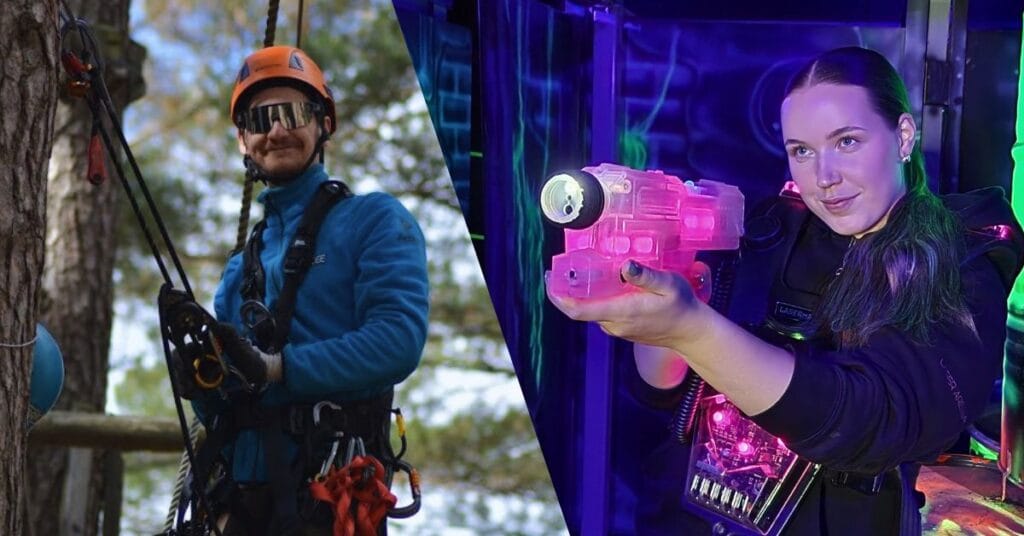
Choosing the environment for a recreational day is one of the most fundamental decisions in the planning of the entire event. Recreational days held outdoors and indoors have different strengths, and the right choice depends primarily on the team's objectives, size, and timing. When the environment supports the purpose of the recreational day, the event is experienced as smooth and meaningful.
This article examines the differences between indoor and outdoor activities and provides practical tips for choosing the right option.
The differences and benefits of outdoor and indoor activities in planning a recreational day
Outdoor activities often offer a change from the everyday and the opportunity to move more freely. They are particularly suitable for situations where the aim is to break away from the office environment and release energy. Recreational days held outdoors often emphasise:
- freedom of space and movement
- natural interaction
- organic experientialism
Indoor activities, on the other hand, offer predictability and weather-proof reliability. They work well when schedules are tight or the group of participants is heterogeneous. Recreational days organised indoors particularly support:
- managed schedule
- low barrier to entry
- a high-quality experience for all participants
How to choose the right environment based on team size and objectives?
When choosing a setting, it's important to clarify the objective of the recreational day. Questions worth considering include:
- Is the goal relaxation or active doing
- How big is the team?
- Are there large differences in the physical activity of participants
For larger teams, indoor spaces often provide better manageability, whereas smaller groups benefit from the flexibility of outdoor spaces. Aligning objectives and group size helps to avoid situations where some participants are left out.
Ideas for hybrid solutions: indoors and outdoors
In all situations, the choice doesn't have to be either/or. Hybrid solutions combine the best aspects of indoor and outdoor activities. For example:
- active outdoor part and a calmer continuation indoors
- Indoor activity with a weatherproof frame and outdoor section as an addition in good weather.
- Dividing the day into segments according to participants' stamina
Hybrid solutions bring flexibility and reduce weather and schedule risks.
Practical tips for scheduling and contingency planning
Regardless of the chosen environment, a successful recreational day requires a clear schedule and a backup plan. Good practices include:
- realistic programme duration and sufficient breaks
- alternative implementation method for weather or schedule changes
- Clear communication to participants in advance
A well-designed overall package makes the organiser's job easier and increases the perceived smoothness for participants.
Book a recreational activity
Request a quote for a spring event – let's plan a successful and impressive spring experience for you together.
More on the topic: